
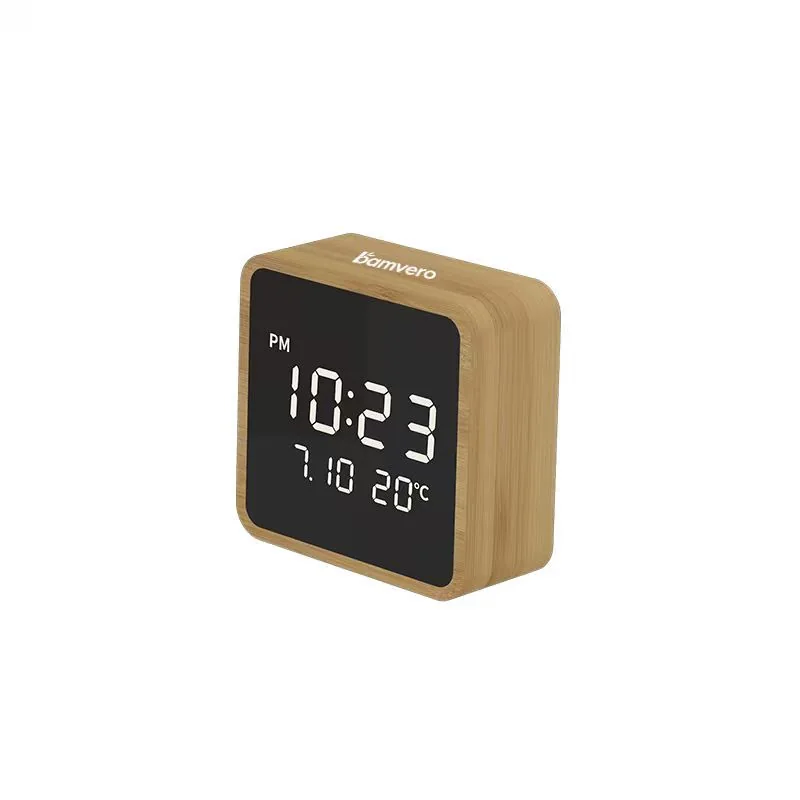
For hotel, home and gift programs, a bamboo or wood clock earns its place when the material warmth does not reduce everyday usability. The buyer needs to see the display in a real setting, understand the power arrangement and know how the item will arrive in a retail box or project handoff.
Choose the room and buyer before the model
A bedside display works differently in a boutique hotel, a home-decor store and a corporate gift set. Define the channel before deciding which clock shape should lead the sample set.
A bedside clock needs to work within the space around it. In a hotel, guests normally need a readable display and simple power setup; in retail, the same model may need a clearer material story and shelf-ready pack.
Define the placement first: bedside table, reception counter, home office shelf or gift set. This helps the buyer judge the right display scale, functions and packaging before collecting samples.
A useful sourcing brief also names the room style, expected viewing distance and whether the product should act as a quiet timekeeper or a visible decorative feature.
For each channel, specify the expected viewing distance, time-format preference and whether the product will sit on a bedside table, reception counter or retail shelf. This prevents a sample that looks attractive in a studio from becoming hard to read or awkward to operate in its real setting.
Before asking for a quotation, decide which part of the buyer journey matters most: a compact everyday clock, a bedside display, a guest-room accessory or a branded gift. That decision changes the useful model shortlist, the amount of packaging work required and the information that needs to appear on the front of the product.
Make display information helpful without becoming too bright
The display should be visible when a guest wakes up, but it should not dominate a room at night. Ask for a real-room photo or video before final approval, especially when the product will be used near a bed or hospitality desk.
Brightness should be reviewed in a normal room, not only in a bright studio. Test the time display from the intended viewing distance and confirm the screen is useful without becoming the visual focus after dark.
For export projects, ask whether the time format, date display, temperature unit and power adapter match the destination market. Small configuration details can affect the sample decision more than an extra feature.
A practical sample review includes both a daytime image and a low-light image. This gives hotel, retail and gift buyers a better basis for deciding how the product will be received by end users.
Use a simple comparison sheet that places the candidate model beside the buyer's target price band, power supply, packaging route and essential functions. Hotel programs should check night visibility and adapter access; retail programs should check how the bamboo finish and carton design read together from normal shelf distance.
Ask for clear sample photos that show the front display, side profile, back controls and carton presentation. A single clean product image is useful, but it cannot answer all operational questions. Reviewing these views early makes it easier to catch a display, power or placement issue before it becomes a production issue.
- Confirm the time format and LED color in ordinary room light.
- Review brightness and visibility from the intended viewing distance.
- Agree on alarm and temperature functions only when they add buyer value.
Let bamboo finish support the retail story
Bamboo and wood finishes are strongest when they work with the rest of the product presentation. A smooth edge, controlled grain direction and a well-sized display panel can make a compact clock feel more considered on a shelf, bedside table or hotel tray.
Bamboo and wood finishing work best when they support the broader retail or hospitality story. Confirm surface tone, logo contrast and packaging presentation together so the product arrives with one material message.
Retail and project buyers should also check whether the cable, instruction card and carton information are appropriate for the final channel. These details are easier to correct before a sample is signed off.
For corporate gift programs, it is helpful to agree whether the finish should read natural, premium, playful or minimal. This keeps the product imagery, box artwork and sales copy aligned.
Packaging deserves a separate approval step. Confirm the printed manual language, logo position, inner protection and master-carton marks before production begins. Buyers who approve these details alongside the sample photo reduce late revisions, particularly when the first shipment is expected to become a repeatable home or hospitality program.
For multi-market orders, define the destination requirements early. Confirm plug format, temperature unit, time convention, manual language and any retail labeling expectations. These decisions are small individually, but together they determine whether a bedside clock is ready for its chosen market without adding a late-stage revision cycle.
- Approve the bamboo tone and logo treatment together.
- Confirm the retail box or project packaging requirement.
- Keep the manual language and carton markings matched to the market.
Use the approved sample as the repeat-order reference
The product sample, product photos and packaging note should stay together once a buyer signs off. That makes the next purchase easier for a different buyer or replenishment team, and reduces unnecessary back-and-forth about what was approved.
Once the sample is approved, document the exact model code, key images, display configuration and packaging note in one purchase record. This is what makes the next order faster and more consistent.
For long-running programs, keep room photographs or shelf references with the approval record. They help a new buyer or purchasing team understand the previously confirmed requirements.
The goal is not a long paperwork process. It is one clear record that lets the supplier repeat the same product, while still allowing controlled changes for a new market or campaign.
After sign-off, keep the model code, approved images, packaging file and lead-time notes together in one reference. That record becomes the handoff between purchasing, merchandising and production, and keeps future bedside-clock orders consistent when the same program returns months later.
A good reorder plan also records what should remain flexible. The same core model may support a different logo position, carton artwork or gift insert for another customer segment. Keeping the fixed specifications separate from the customizable elements helps protect the product identity while making later programs easier to adapt.
- Store approved sample images with the model code.
- Keep the artwork and packaging version in one record.
- Use the same reference file for replenishment discussions.
Need a wooden bedside clock shortlist?
Share your channel, expected quantity and destination market. We will suggest a focused bamboo clock route for sample review.
Request a shortlist