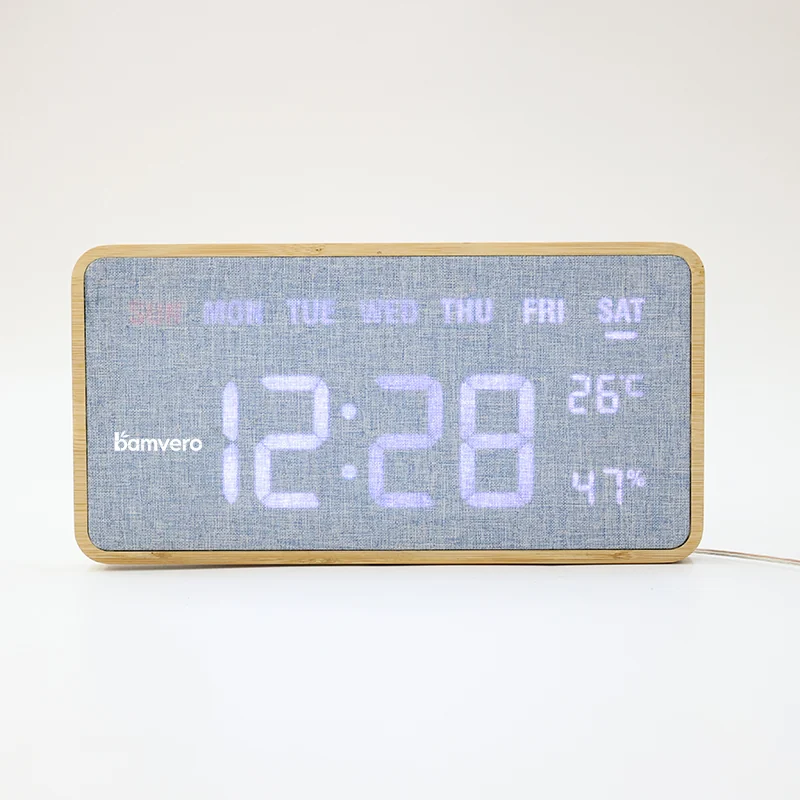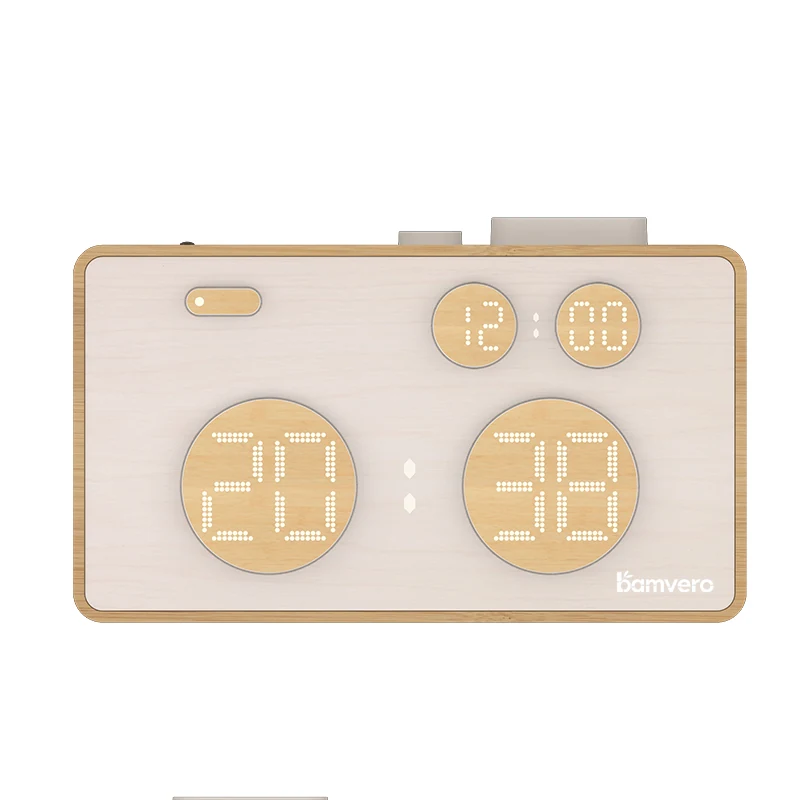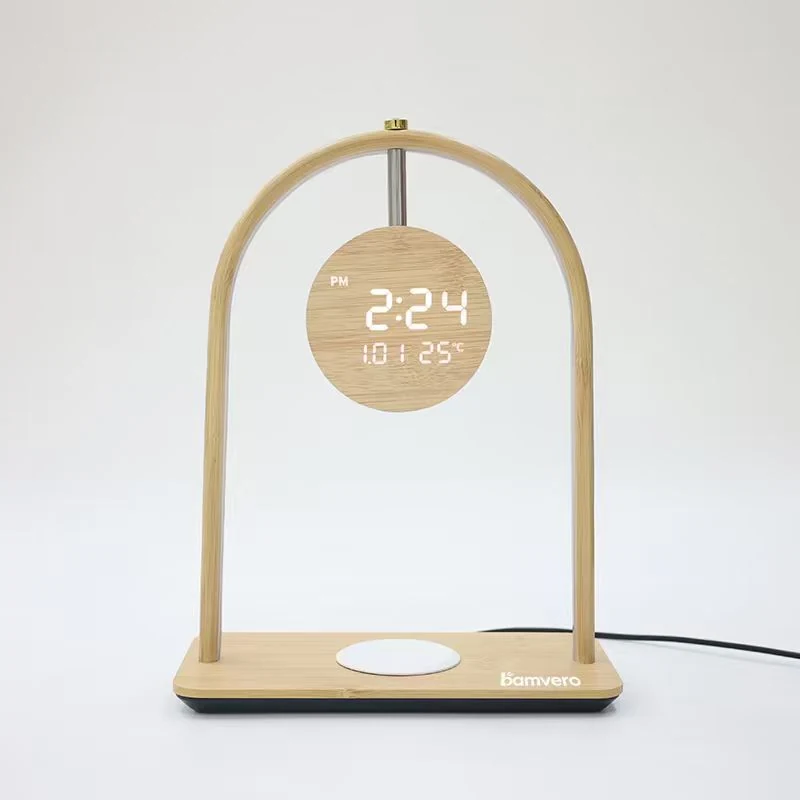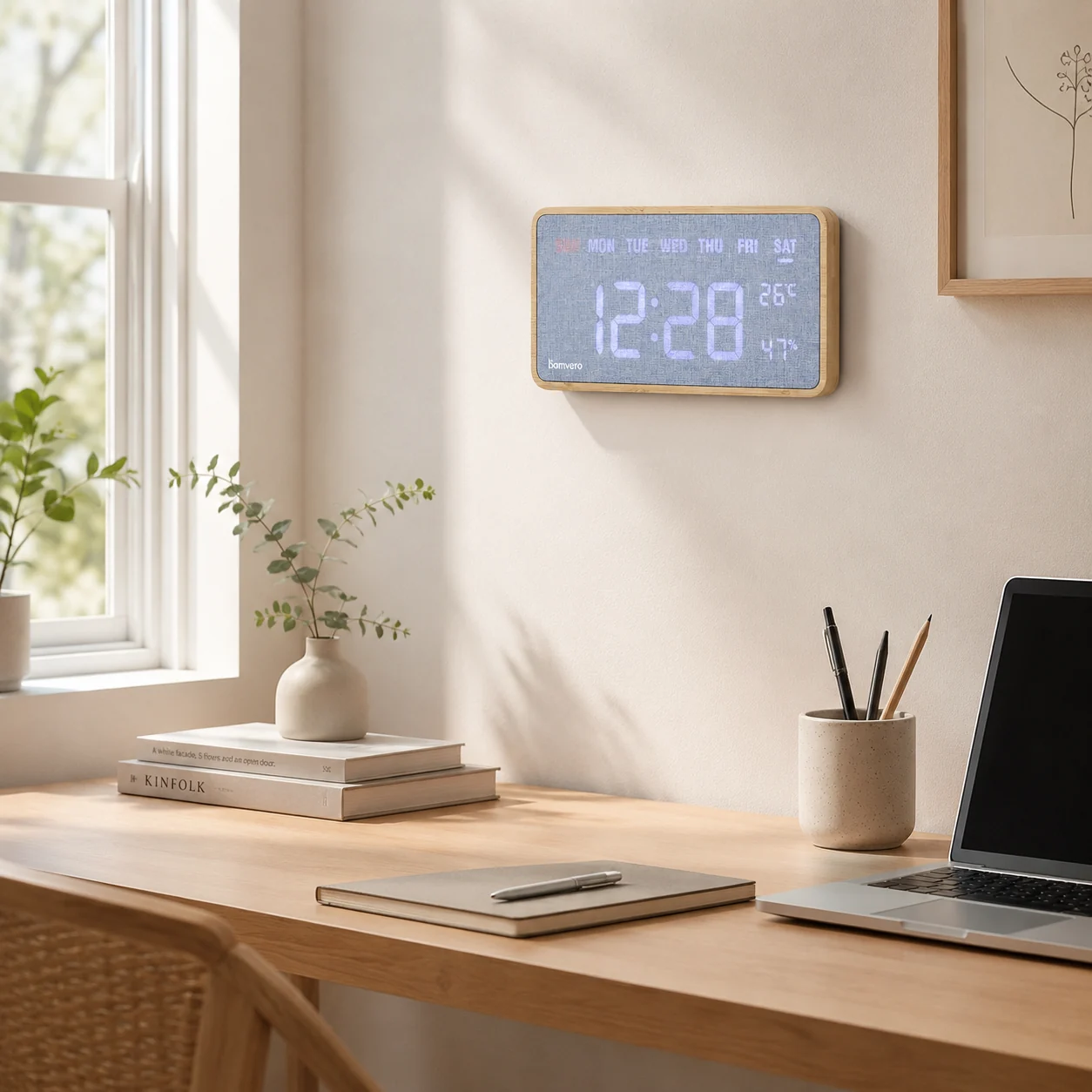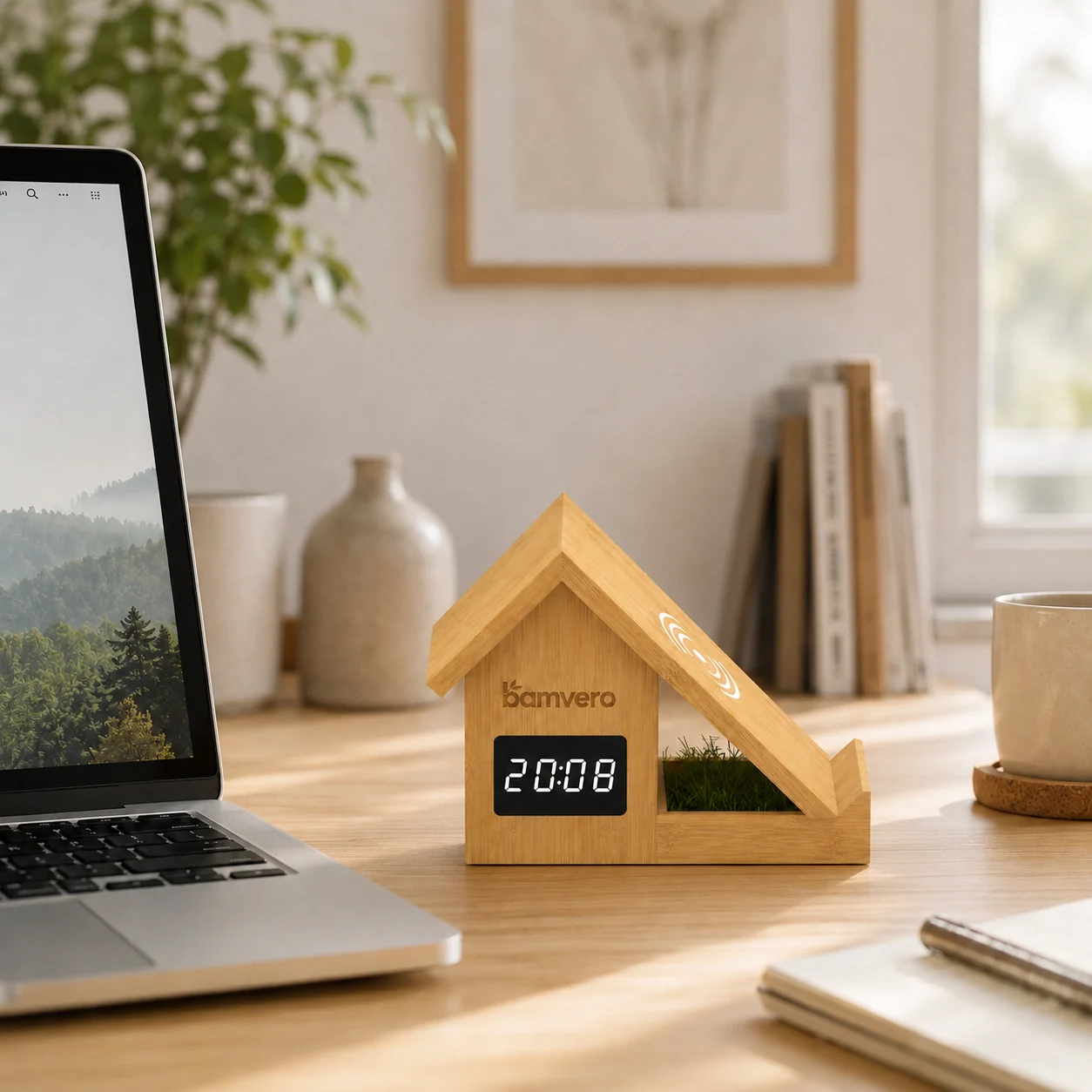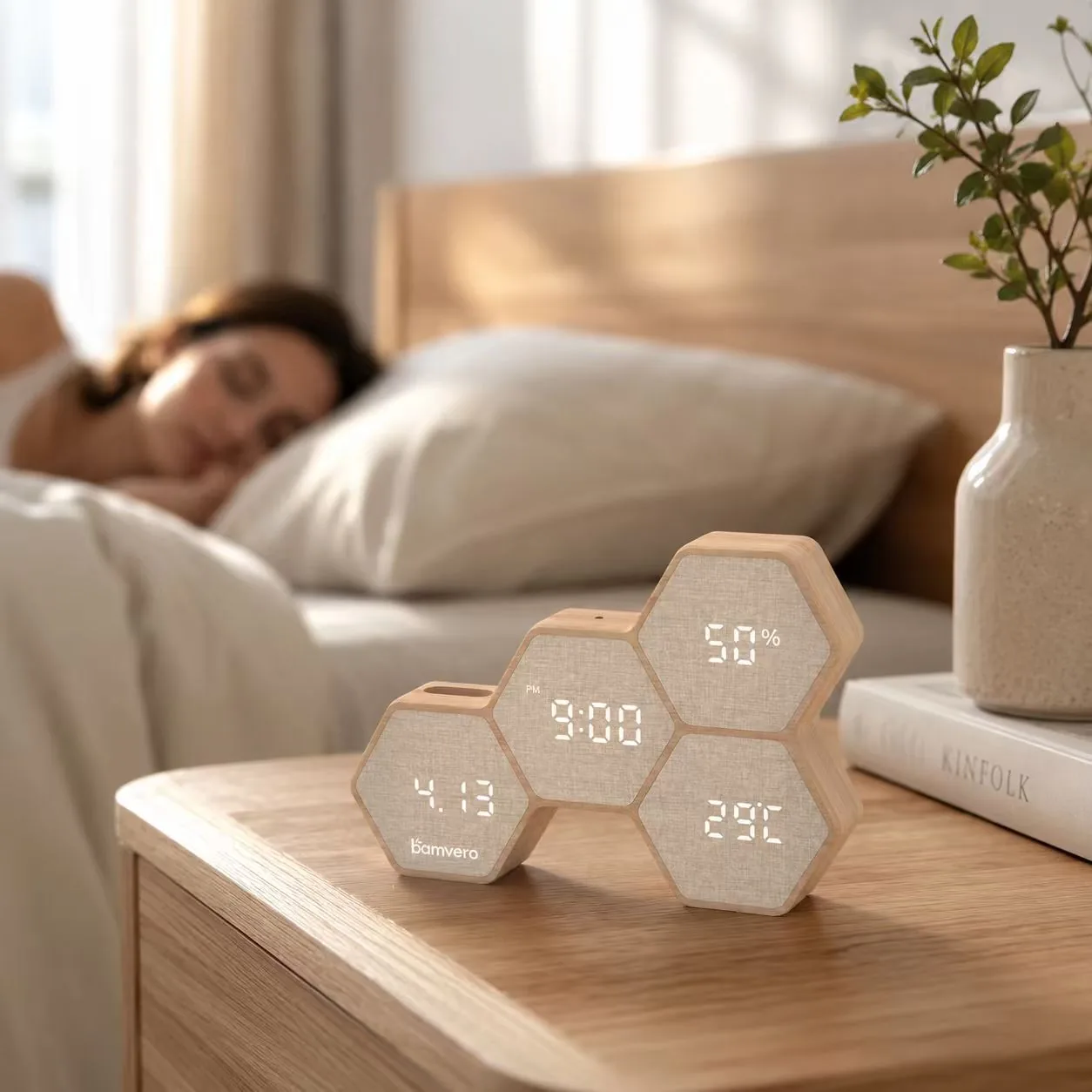
A clock is often specified as a small finishing piece, but its format changes how naturally it fits a buyer's program. For office, hospitality and decor retail projects, the clearest starting point is to choose the display format before discussing a logo or packaging.
Start with the placement, not only the clock face
A desk clock works best when the buyer needs a compact object for reception counters, workstations, gift sets or bedside tables. It keeps the product close to the user and can combine time display with charging, a pen holder or a small lamp.
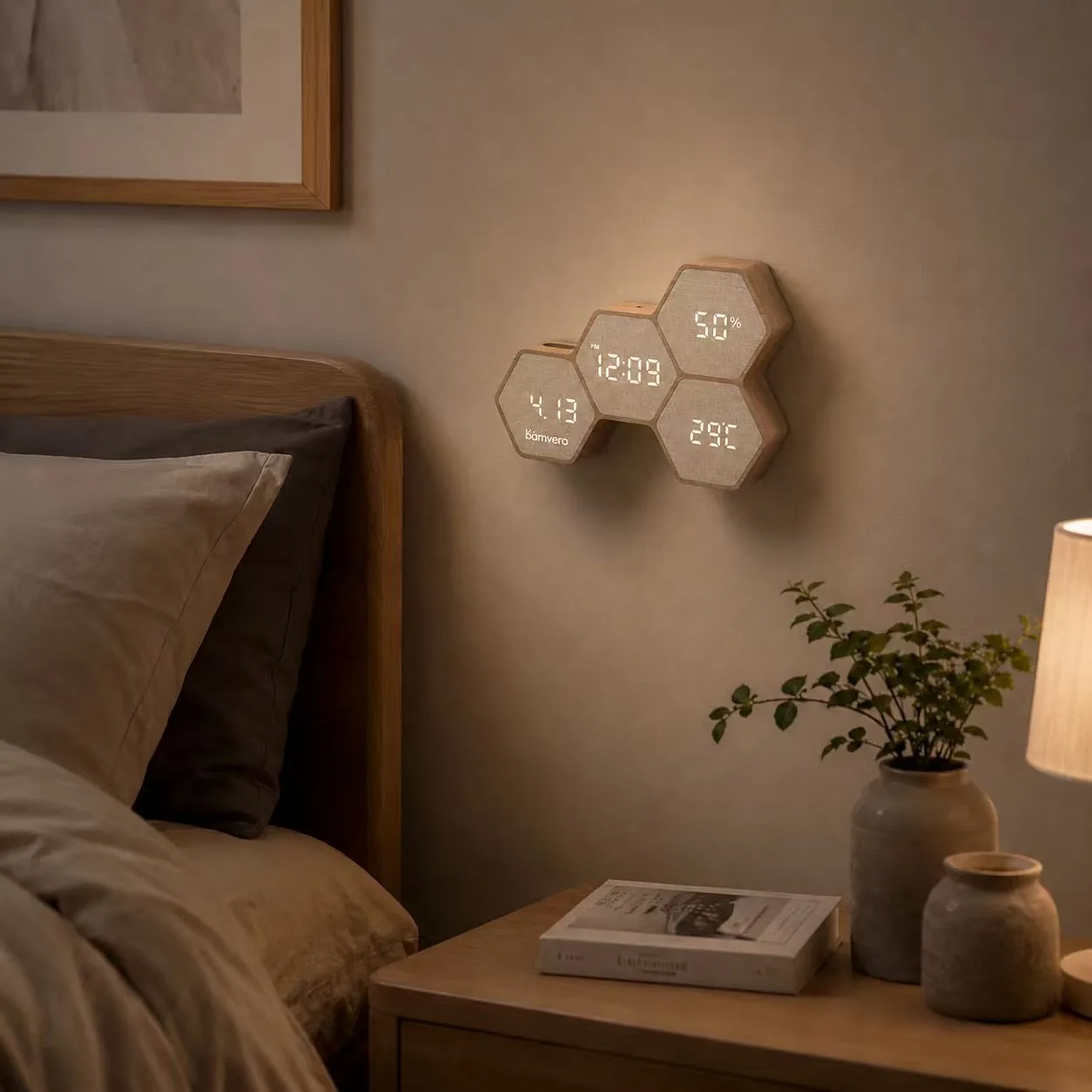
A wall clock becomes more useful when a room needs a visual focal point without using desk space. Geometric formats can work especially well in hotel rooms, showrooms and styled retail displays because the silhouette carries more of the decor value.
- Confirm whether the product will sit on a desk, shelf, bedside table or wall.
- Check the viewing distance before choosing LED digit size and display brightness.
- Match the clock silhouette to the room: compact rectangle, round face, arch or geometric format.
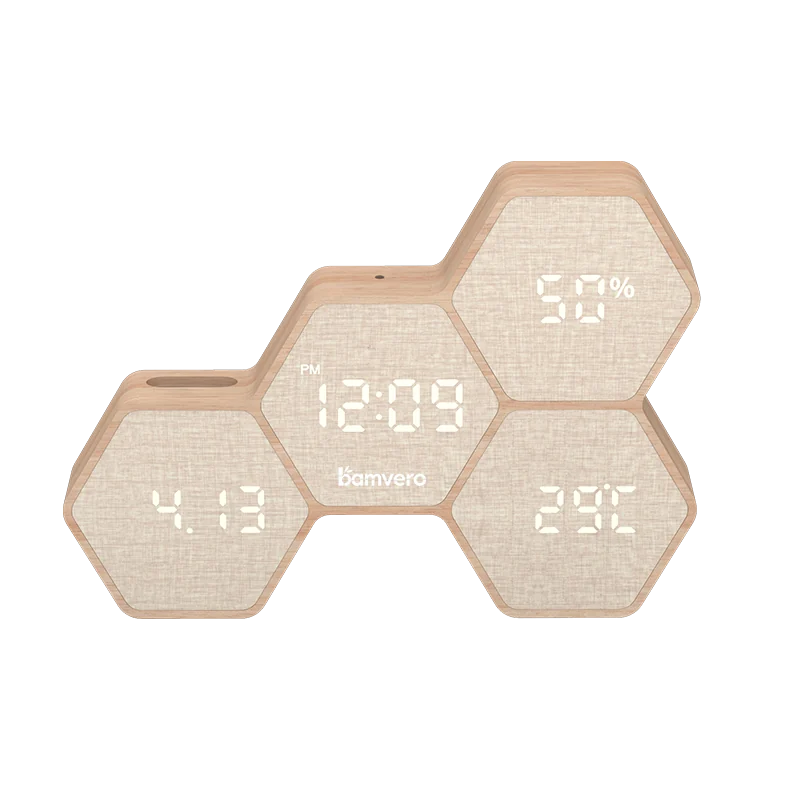
- Ask whether the buyer needs time only, or date, temperature and humidity information too.
Why geometric LED clocks are useful for decor-led sourcing
A geometric bamboo clock gives the buyer more visual character than a plain digital block, while keeping practical time and environment information visible. It can support room decor, office gifting and hospitality placement without making the display feel like a purely decorative prop.
For private-label programs, buyers should review the front material, logo area, wall-mount or tabletop direction and display color together. These details shape the finished presentation more than a simple model photo alone.
A concise sample review checklist
Before a larger order, ask for a sample that reflects the actual intended program. A standard sample can prove the basic form, but branding, display language and package direction should be reviewed separately when they matter to the buyer.
This avoids approving a model only to revisit front-panel details after the product has already been presented to a client or retail team.
- Review front-panel material and bamboo color in the planned lighting conditions.
- Confirm the display mode, brightness, power supply and time-setting instructions.
- Check where the logo can appear without reducing display readability.
- Review carton marks, manual language and any gift-ready insert before bulk confirmation.
Products connected to this guide.